
Kilimanjaro Altitude Sickness Guide: Prevention Tips, Symptoms & How to Stay Safe
Climbing Mount Kilimanjaro is a dream for many travelers and adventure lovers. Standing at 5,895 meters, it is the highest mountain in Africa and one of the most popular trekking destinations in the world. However, reaching the summit is not just about fitness it is also about how your body reacts to high altitude. Every year, thousands of climbers from different countries attempt this incredible journey, making careful preparation, proper guidance, and realistic expectations essential for enjoying the experience from the first day to the final ascent.
One of the biggest challenges climbers face is Kilimanjaro altitude sickness. It can affect anyone, no matter how fit or experienced they are. Understanding how it works and how to prevent it is the key to a successful and safe climb. The reduced oxygen levels at higher elevations force the body to adjust gradually, which is why following a steady pace and allowing enough time for acclimatization are critical parts of every successful Kilimanjaro expedition.
In this complete guide, you will learn what Kilimanjaro altitude sickness is, its symptoms, how to prevent it, and what to do if it happens. You will also discover why experienced mountain guides closely monitor climbers throughout the trek and how recognizing early warning signs can make a significant difference in maintaining your health, confidence, and overall chances of reaching Uhuru Peak safely.
Whether you are planning your first mountain adventure or returning for another high-altitude trek, having the right knowledge will help you prepare with confidence. Learning about Kilimanjaro altitude sickness before your trip allows you to make informed decisions, reduce unnecessary risks, and enjoy one of Africa’s greatest adventures while prioritizing safety, comfort, and a memorable summit experience.
What Is Kilimanjaro Altitude Sickness?
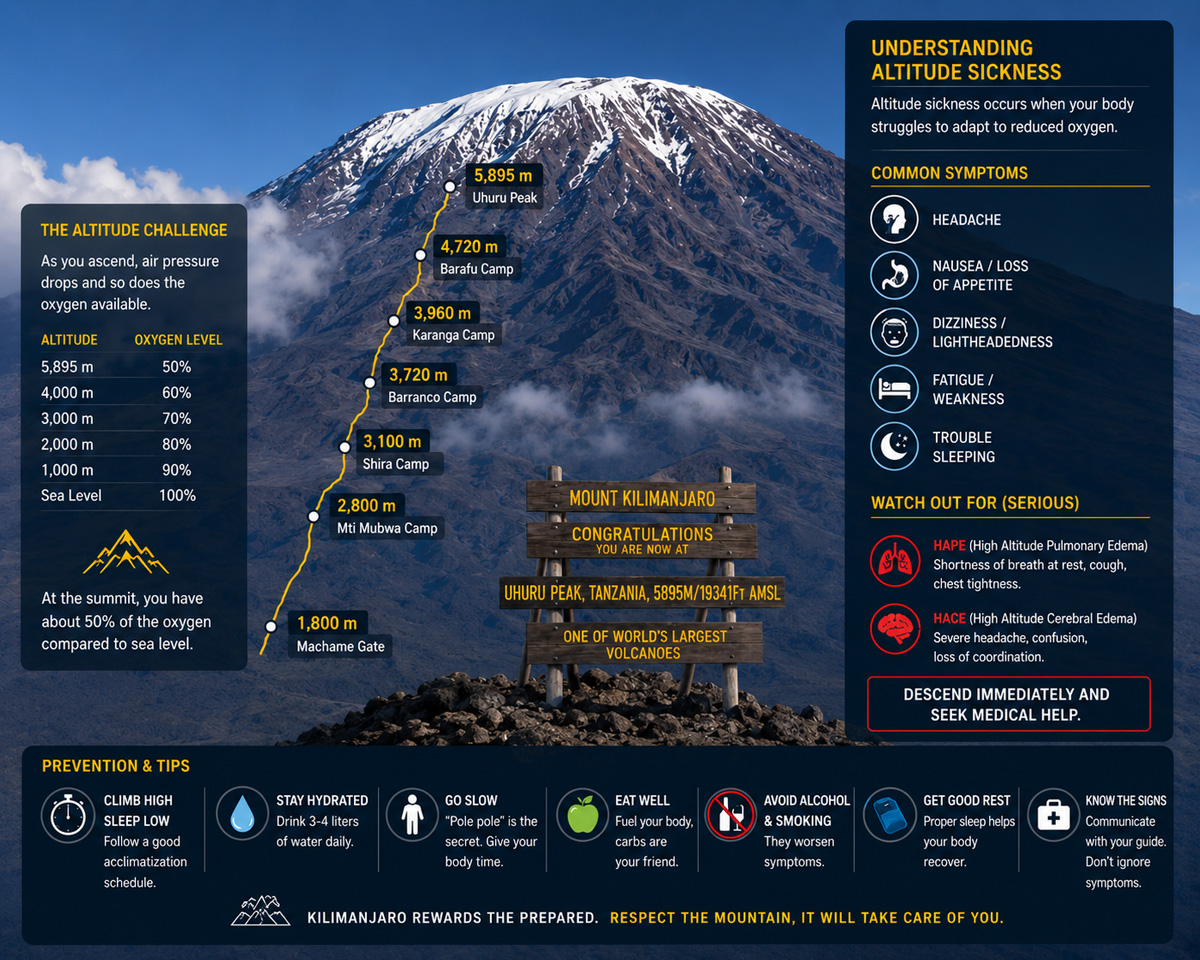
Kilimanjaro altitude sickness happens when your body struggles to adjust to lower oxygen levels at high elevations. As you climb higher, the air becomes thinner, meaning less oxygen is available for your body. This natural decrease in oxygen can make even simple activities such as walking uphill feel more demanding, especially for climbers who are not yet acclimatized to the mountain’s changing conditions.
This condition is also known as Acute Mountain Sickness (AMS). It usually starts above 2,500 meters, which is well below the summit of Kilimanjaro. That means most climbers will experience some level of altitude effect during their trek. While the symptoms are often mild at first, they should never be ignored because they can become more serious if the climb continues without proper acclimatization and careful monitoring.
The main reason Kilimanjaro altitude sickness occurs is because the body does not have enough time to adapt to the changing altitude. This is why slow and steady climbing is so important. Giving your body additional time to adjust allows it to produce more red blood cells and improve oxygen delivery, helping reduce the likelihood of developing more severe altitude-related complications during the ascent.
Although Kilimanjaro altitude sickness is common, it does not affect everyone in the same way. Some climbers experience only minor discomfort, while others may develop stronger symptoms despite being physically fit. Understanding how altitude affects your body and following your guide’s advice greatly increases your chances of enjoying a safe, comfortable, and successful journey to Uhuru Peak.
Why Altitude Sickness Is Common on Kilimanjaro
Unlike other high mountains, Kilimanjaro is unique because you can go from rainforest to arctic conditions in just a few days. This rapid ascent increases the risk of Kilimanjaro altitude sickness. The dramatic change in climate and elevation places extra stress on the body, making proper acclimatization an essential part of every successful climb regardless of previous hiking experience.
Many climbers underestimate how quickly they gain elevation. Even though the trek is considered non-technical, the altitude makes it physically demanding. As the air becomes thinner, your body receives less oxygen with every breath, causing fatigue, slower movement, and increased effort even during sections of the trail that appear relatively easy and manageable.
Another reason is that people often choose shorter routes to save time or money. Unfortunately, shorter routes give your body less time to adjust, increasing the chances of Kilimanjaro altitude sickness. Longer itineraries allow for better acclimatization, giving climbers more opportunities to adapt gradually to the higher elevations before attempting the final summit push.
Choosing the right route, maintaining a slow hiking pace, staying well hydrated, and listening carefully to experienced mountain guides can significantly reduce the effects of altitude. While no one can completely eliminate the risk of Kilimanjaro altitude sickness, careful planning and gradual ascent greatly improve both safety and the likelihood of reaching the summit successfully.
Symptoms of Kilimanjaro Altitude Sickness
Understanding the symptoms early can help prevent serious complications. Kilimanjaro altitude sickness can range from mild to severe. Recognizing the warning signs as soon as they appear allows climbers and guides to take appropriate action before the condition becomes more dangerous. Paying close attention to how you feel each day is an important part of staying safe on the mountain.
Mild Symptoms
These are the most common signs and usually appear within a few hours of reaching a higher altitude:
Headache
Dizziness
Fatigue
Loss of appetite
Nausea
Mild Kilimanjaro altitude sickness is normal and can often be managed with rest and hydration. Many climbers experience one or more of these symptoms as their bodies begin adjusting to lower oxygen levels. Eating regular meals, drinking plenty of water, and avoiding unnecessary physical exertion can help reduce discomfort while allowing the body time to acclimatize naturally.
Moderate Symptoms
If symptoms worsen, they may include:
Severe headache
Vomiting
Difficulty sleeping
Shortness of breath
At this stage, Kilimanjaro altitude sickness requires attention. You may need to stop climbing or descend slightly. Mountain guides will usually monitor your condition carefully, check your oxygen levels if equipment is available, and decide whether it is safe to continue or whether additional rest or descent is necessary.
Severe Symptoms (Emergency)
Severe altitude sickness can be life-threatening and includes:
Confusion
Loss of coordination
Persistent cough
Chest tightness
These symptoms may indicate HAPE (High Altitude Pulmonary Edema) or HACE (High Altitude Cerebral Edema). Immediate descent is critical when Kilimanjaro altitude sickness reaches this level. Delaying treatment can lead to serious complications, so emergency medical attention and rapid evacuation should be arranged as quickly as possible to protect the climber’s health and safety.
How to Prevent Kilimanjaro Altitude Sickness
Prevention is the most important part of dealing with Kilimanjaro altitude sickness. With proper preparation and smart decisions, you can greatly reduce your risk. While no method can completely eliminate the possibility of altitude sickness, following proven acclimatization practices significantly improves your chances of reaching the summit safely and comfortably.
Choose a Longer Route
Longer routes like Lemosho or Northern Circuit give your body more time to adjust. This is one of the best ways to avoid Kilimanjaro altitude sickness. Spending additional days on the mountain allows your body to adapt gradually to the reduced oxygen levels, making longer itineraries the preferred choice for climbers aiming for higher summit success rates.
Climb Slowly
The golden rule is: “Pole Pole” (slowly slowly). Walking at a steady pace helps your body adapt and reduces the risk of Kilimanjaro altitude sickness. Moving too quickly may increase physical stress and make acclimatization more difficult, so experienced guides encourage a slow, consistent pace throughout every stage of the climb.
Stay Hydrated
Drink at least 3-4 liters of water per day. Proper hydration helps your body cope better with altitude changes and prevents Kilimanjaro altitude sickness. Dehydration can worsen altitude-related symptoms, so drinking water regularly, even when you do not feel thirsty, is an important habit during the trek.
Eat Well
Even if you lose appetite, try to eat enough food. Your body needs energy to adjust to altitude and fight Kilimanjaro altitude sickness. Eating balanced meals that include carbohydrates, proteins, and healthy fats helps maintain your energy levels and supports your body’s natural acclimatization process throughout the expedition.
Avoid Alcohol and Smoking
Alcohol and smoking reduce oxygen levels in your body. Avoiding them is essential to prevent Kilimanjaro altitude sickness. These habits can interfere with your body’s ability to adapt to high elevations, increase dehydration, and make it more difficult to recognize early symptoms of altitude sickness.
Consider Medication
Some climbers use medications like acetazolamide (Diamox) to help prevent Kilimanjaro altitude sickness. Always consult a doctor before using it. When prescribed correctly, this medication may help speed up acclimatization for some individuals, but it should never replace proper pacing, hydration, healthy nutrition, and following the guidance of experienced mountain professionals.
Who Is at Risk of Altitude Sickness?
Anyone can experience Kilimanjaro altitude sickness, regardless of age or fitness level. Even professional athletes can be affected. Altitude sickness does not discriminate based on physical strength, hiking experience, or overall health because every person’s body responds differently to reduced oxygen levels. This is why all climbers should take preventive measures seriously throughout the expedition.
However, some factors may increase risk:
Rapid ascent
Previous history of altitude sickness
Poor hydration
Ignoring symptoms
These factors make it more difficult for the body to adapt to increasing elevation. Climbers who ascend too quickly or fail to stay properly hydrated are more likely to develop symptoms. Likewise, individuals who have experienced altitude sickness on previous mountain climbs may have a higher chance of experiencing Kilimanjaro altitude sickness again if proper precautions are not taken.
Other contributing factors may include inadequate rest, poor nutrition, excessive physical exertion, and choosing shorter climbing routes with limited acclimatization time. Although these factors can increase the likelihood of altitude-related illness, they do not guarantee that someone will develop symptoms. Careful planning and responsible climbing habits remain the best defenses against altitude sickness.
Understanding your limits is important when dealing with Kilimanjaro altitude sickness. Pay attention to your body’s signals, communicate honestly with your guide about any symptoms, and never ignore persistent discomfort. Taking early action can prevent minor symptoms from becoming serious, helping you stay safe while improving your chances of successfully reaching Uhuru Peak.
How Guides Monitor Your Health
On Kilimanjaro, guides play a crucial role in managing Kilimanjaro altitude sickness. They perform daily health checks to ensure climbers are safe throughout the trek. Their training and experience allow them to recognize subtle changes in a climber’s condition, helping identify potential altitude-related problems before they become severe and require emergency intervention.
Common Checks Include:
Oxygen saturation (pulse oximeter)
Heart rate
General condition assessment
These routine assessments provide valuable information about how well your body is adapting to higher elevations. Guides may also ask about headaches, nausea, appetite, sleep quality, dizziness, and energy levels because these symptoms can indicate the early stages of Kilimanjaro altitude sickness, even when vital signs appear relatively normal.
The results of these health checks help guides decide whether it is safe for you to continue climbing, take additional rest, or descend to a lower altitude. Early intervention is one of the most effective ways to prevent mild symptoms from progressing into more serious forms of Kilimanjaro altitude sickness, protecting both your health and your chances of completing the climb.
These checks help detect early signs of Kilimanjaro altitude sickness before they become serious. By communicating honestly with your guide about how you feel and following their recommendations, you greatly improve your safety on the mountain. Working together as a team ensures that every decision made during the climb prioritizes your health and a successful trekking experience.
What to Do If You Get Altitude Sickness

If you start experiencing symptoms, do not ignore them. Acting early can prevent serious problems related to Kilimanjaro altitude sickness. Prompt action gives your body the best chance to recover and reduces the risk of symptoms progressing into more severe altitude-related conditions. Always inform your guide immediately if you notice any changes in how you feel during the climb.
Stop and Rest
Take a break and allow your body to adjust. Mild Kilimanjaro altitude sickness often improves with rest. Avoid pushing yourself to continue climbing while experiencing symptoms, as additional physical exertion can make the condition worse. Giving your body time to recover may help relieve discomfort and improve your ability to acclimatize.
Hydrate
Drink more fluids and avoid dehydration. This helps reduce symptoms of Kilimanjaro altitude sickness. Staying well hydrated supports your body’s natural adjustment to high altitude and may help ease headaches and fatigue. Continue eating nutritious meals if possible, as maintaining energy levels is also important during the acclimatization process.
Descend If Needed
If symptoms do not improve or worsen, descending is the safest option. The best treatment for Kilimanjaro altitude sickness is going to a lower altitude. Delaying descent can increase the risk of serious complications such as HAPE or HACE, which require immediate medical attention. Following your guide’s instructions and prioritizing your health over reaching the summit is always the safest and smartest decision.
Best Time to Climb to Reduce Risk
Weather can also impact your experience with Kilimanjaro altitude sickness. Choosing the right season to climb can make the trek more comfortable and improve your body’s ability to adapt to high altitude. Although altitude sickness can occur at any time of the year, favorable weather conditions often make the overall climbing experience safer and less physically demanding.
The best months to climb are:
January to March
June to October
These are the two main climbing seasons because they generally offer clearer skies, lower rainfall, and better trail conditions. Dry weather makes hiking easier, keeps clothing and equipment drier, and allows climbers to focus more on maintaining a steady pace and proper acclimatization throughout the journey to the summit.
During these periods, weather conditions are more stable, making it easier to manage Kilimanjaro altitude sickness. Stable weather reduces additional physical stress caused by heavy rain, muddy trails, or extreme cold, helping climbers conserve energy while following important acclimatization practices such as staying hydrated, eating well, and climbing slowly.
Although climbing during the recommended seasons can improve your overall experience, there is no perfect time that completely eliminates the risk of Kilimanjaro altitude sickness. Proper preparation, selecting a longer route, listening to experienced guides, and giving your body enough time to adjust remain the most effective ways to increase your chances of a safe and successful ascent to Uhuru Peak.
Common Myths About Altitude Sickness
There are many misconceptions about Kilimanjaro altitude sickness that can mislead climbers during preparation and on the mountain. Believing incorrect information may increase risk, reduce proper planning, and lead to poor decisions at high altitude. Understanding the truth behind these myths is essential for safety, awareness, and successful acclimatization.
Myth 1: Only Unfit People Get It
Not true. Even fit climbers can experience Kilimanjaro altitude sickness. Physical fitness does not protect the body from reduced oxygen levels at high elevation. In fact, very fit individuals sometimes push too hard too quickly, which can make symptoms appear faster. Altitude sickness depends more on acclimatization than strength or endurance.
Myth 2: Drinking More Water Prevents It Completely
Hydration helps, but it does not fully prevent Kilimanjaro altitude sickness. Drinking enough water supports circulation, energy levels, and overall body function, but it cannot replace the need for gradual ascent. Oxygen levels still decrease with altitude, and the body still requires time to adjust regardless of how well hydrated you are.
Myth 3: You Can Push Through It
Ignoring symptoms can be dangerous. Always respect Kilimanjaro altitude sickness signals. Trying to “push through” headaches, dizziness, or nausea can lead to more serious conditions that require emergency descent. The safest approach is to stop, rest, and inform your guide immediately when symptoms appear instead of continuing upward at the same pace.
Myth 4: Once You’ve Climbed Before, You’re Immune
Another common misconception is that previous high-altitude experience guarantees protection. While past climbs may help your confidence, they do not make you immune to Kilimanjaro altitude sickness. Each climb is different, and your body still needs time to adapt every time you ascend to high elevations, regardless of experience level.
Essential Packing Tips for Altitude Safety
Packing the right gear can significantly help you manage Kilimanjaro altitude sickness more effectively. Proper equipment not only keeps you comfortable in changing weather conditions but also supports your body as it adjusts to reduced oxygen levels at higher elevations. Careful preparation before the climb reduces stress on the mountain and improves your ability to respond to early symptoms.
Must Have Items:
Warm clothing
Reusable water bottles
Electrolyte supplements
Personal medication
Warm clothing is essential because temperatures drop sharply as you gain altitude, especially at night and near the summit. Layering helps you regulate body temperature while conserving energy, which is important when dealing with Kilimanjaro altitude sickness. Staying warm also prevents unnecessary physical strain that can worsen fatigue and discomfort during the climb.
Reusable water bottles make it easier to stay consistently hydrated throughout the trek. Drinking small amounts frequently supports circulation and oxygen delivery in the body, helping reduce the impact of Kilimanjaro altitude sickness. Electrolyte supplements further assist by replacing minerals lost through sweat and maintaining energy levels during long hiking days.
Personal medication, including prescribed altitude sickness prevention tablets if recommended by a doctor, should always be carried in an accessible place. Being prepared makes it easier to deal with Kilimanjaro altitude sickness if it occurs. Quick access to necessary items allows for faster response to symptoms, ensuring better safety and more effective management of altitude-related challenges on the mountain.
FAQs — Kilimanjaro Altitude Sickness Guide: Prevention Tips, Symptoms & How to Stay Safe
What is altitude sickness on Mount Kilimanjaro?
Altitude sickness (Acute Mountain Sickness or AMS) is a condition caused by reduced oxygen levels at high elevations on Mount Kilimanjaro. It commonly occurs above 2,500 meters, with symptoms becoming more noticeable as climbers approach higher camps and summit zones.
What are the early symptoms of Kilimanjaro altitude sickness?
Early symptoms include:
- Headache
- Dizziness
- Fatigue
- Loss of appetite
- Nausea
Recognizing these early signs is critical to prevent the condition from becoming severe.
How serious is altitude sickness on Kilimanjaro?
Altitude sickness can become life-threatening if ignored. In severe cases, it may progress to High Altitude Pulmonary Edema (HAPE) or High Altitude Cerebral Edema (HACE), both of which require immediate descent and emergency treatment.
Who is most at risk of altitude sickness on Kilimanjaro?
Anyone can be affected, regardless of fitness level or age. However, risk increases for climbers who:
- Ascend too quickly
- Do not acclimatize properly
- Are dehydrated
- Have a history of altitude sickness
How can I prevent altitude sickness on Kilimanjaro?
Prevention tips include:
- Choose longer routes (7–8 days)
- Ascend slowly (“pole pole” pace)
- Drink plenty of water daily
- Eat enough calories even when appetite decreases
- Avoid alcohol and smoking before and during the climb
These steps significantly reduce your risk of AMS.
Does physical fitness prevent altitude sickness?
No. Fitness helps with endurance but does not prevent altitude sickness. Even very fit climbers can suffer from AMS if they ascend too quickly or fail to acclimatize properly.
What role does acclimatization play in staying safe?
Acclimatization allows your body to adjust to lower oxygen levels. Gradual ascent routes and rest days help your body produce more red blood cells, improving oxygen delivery and reducing the risk of severe altitude sickness.
What should I do if I develop symptoms during the climb?
If symptoms appear:
- Stop ascending immediately
- Rest at the same altitude
- Inform your guide right away
- Drink water and monitor symptoms
If symptoms worsen, the safest treatment is immediate descent.
Can medication help prevent altitude sickness on Kilimanjaro?
Yes. Some climbers use medications like Acetazolamide (Diamox) to help prevent AMS. However, it should only be taken under medical advice before the climb, and it does not replace proper acclimatization.
What is the safest way to climb Kilimanjaro without altitude sickness?
The safest approach combines:
- A longer trekking route
- Experienced mountain guides
- Slow and steady hiking pace
- Proper hydration and nutrition
- Early response to symptoms
Following these guidelines greatly improves safety and increases your chance of reaching Uhuru Peak without severe altitude sickness.
Plan your Trip
Ready to start planning your own incredible adventure?
We make the process stress-free and enjoyable.